

Banking in Switzerland
Switzerland has a highly developed and secure banking system, with a wide range of national, cantonal, regional, private and digital banking providers. Most banks offer online banking, mobile banking, debit and credit cards, savings accounts, investment services and mortgage solutions.
Swiss Currency
The Swiss currency is the Swiss franc (CHF), divided into francs and centimes.
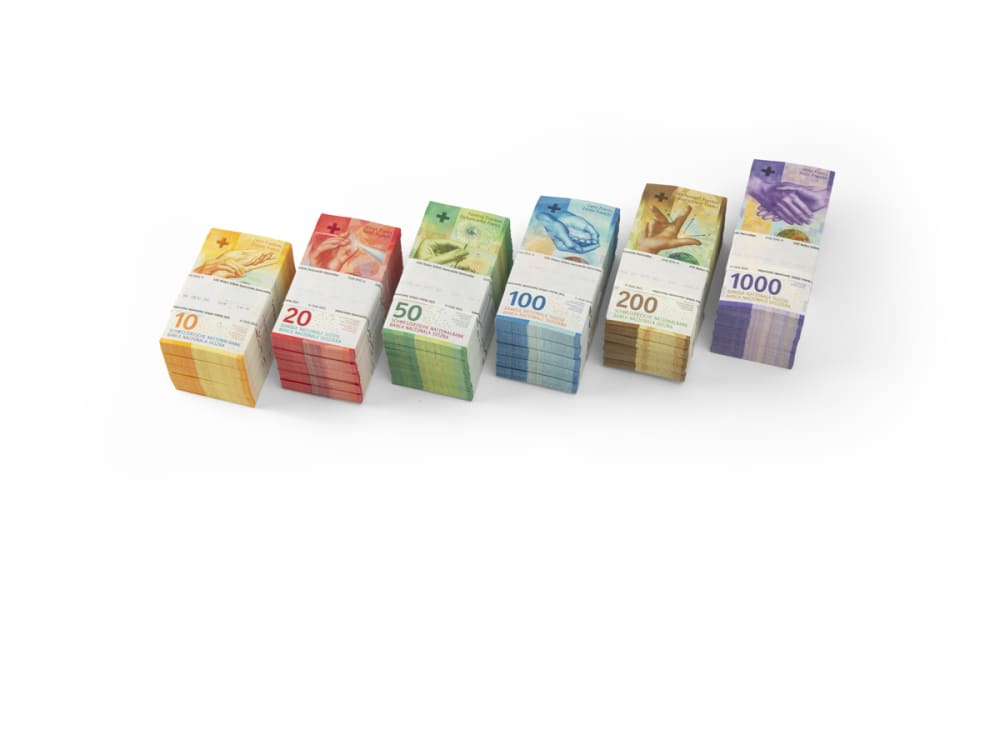
Banknotes are available in denominations of CHF 10, 20, 50, 100, 200 and 1'000. Coins are available in 5, 10, 20 and 50 centimes, as well as CHF 1, 2 and 5.
Bank branches are generally open from Monday to Friday during business hours, although opening times vary depending on the bank and location. Cash can be withdrawn at ATMs at any time, and card payments are widely accepted throughout Switzerland.
Opening a Bank Account
Opening a Swiss bank account is one of the first practical steps after arrival, as salaries are usually paid directly into a Swiss account.
An account can generally be opened as an individual account or, where applicable, as a joint account. Some employers have preferred banking partners or special conditions for employees, so it is worth checking with your HR department before choosing a bank.
To open an account, banks usually request:
- Valid passport or identity document
- Swiss residence permit or proof of residence application
- Swiss residential address
- Employment contract or salary confirmation, depending on the bank
Some banks allow the opening process to start online, although identity verification may still be required in person, by video identification or through a secure digital process.
Once the account is opened, you will normally receive a debit card and access to online and mobile banking.
Main Banks in Switzerland
Switzerland offers a wide range of banking institutions, from nationwide retail banks to regional cantonal banks and digital banking providers. The most suitable choice will depend on your personal banking needs, your nationality, your place of residence and, in some cases, your employer's preferred banking partner.
National Banks
- UBS – Switzerland’s largest bank, offering retail banking, wealth management, mortgage and investment services. WS client have 2 years free of charge service.
- PostFinance – A widely used Swiss financial institution, particularly strong for payment services, everyday banking and digital banking.
- Raiffeisen – A cooperative banking group with an extensive local branch network throughout Switzerland.
- Migros Bank – A retail bank offering private accounts, savings, mortgages and investment services.
Digital & International Banking
- CA Next Bank – Swiss retail bank with digital banking, mortgages, savings, and competitive FX services.
Cantonal Banks
Each canton generally has its own cantonal bank, combining local expertise with a comprehensive range of retail and business banking services.
- Banque Cantonale de Genève – BCGE – Geneva
- Banque Cantonale Vaudoise – BCV – Canton of Vaud
Digital Banking
E-banking and mobile banking are widely used in Switzerland and allow you to manage most banking matters remotely.
Through your bank’s digital platform, you can usually:
- Check account balances
- Make domestic and international payments
- Scan and pay QR-bills
- Manage debit and credit cards
- Download bank statements
- Set up standing orders
- Exchange currencies
- Access investment or savings products
Most Swiss banks also offer secure mobile authentication for login and payment approval.
Paying Bills
Most Swiss invoices are issued as QR-bills, which include a QR code containing the payment information. These can be scanned directly using your mobile banking app or e-banking platform.
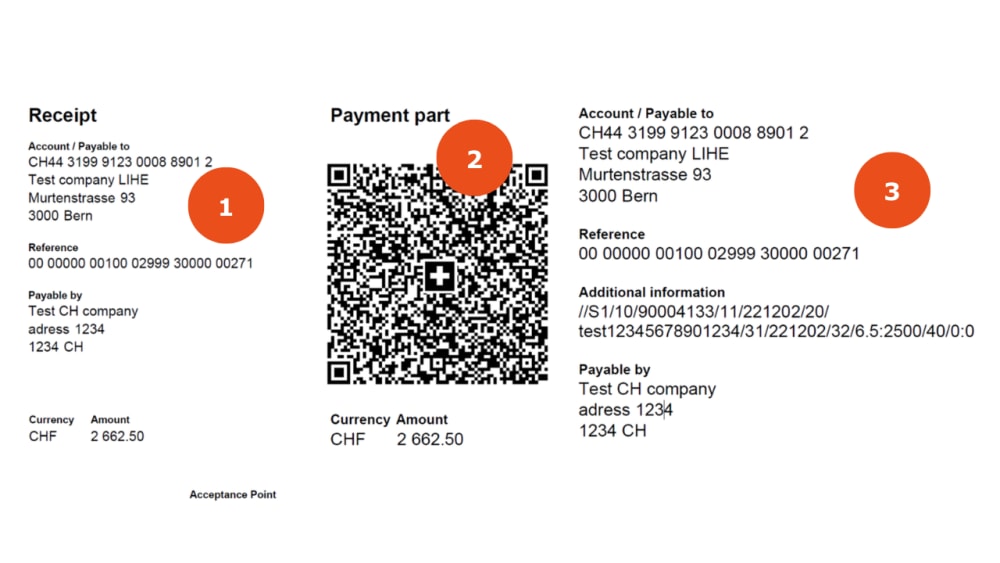
- Payment receipt / 2. Swiss QR code / 3. Payment Info
For regular payments, such as rent, insurance premiums or school fees, you can set up a standing order so that payments are made automatically on a fixed date.
Some providers also offer eBill, which allows invoices to be received, checked and approved directly within your e-banking platform.
Debit Cards, Credit Cards and Mobile Payments
Swiss bank accounts usually include a debit card, which can be used for payments in shops, restaurants, supermarkets and online, as well as ATM withdrawals.
Credit cards are available separately and may be subject to income, residence or credit checks depending on the bank.
TWINT is Switzerland’s leading mobile payment app and is widely used for everyday payments, online purchases, parking, public transport tickets and person-to-person transfers. It can usually be linked directly to your Swiss bank account.
Good to Know
Banking conditions, account fees and card charges vary significantly between banks. Before opening an account, it is advisable to compare monthly fees, debit and credit card costs, international transfer charges and online banking services.
For newcomers, practical considerations such as English-speaking support, digital services, branch location and compatibility with TWINT are often just as important as account fees.